

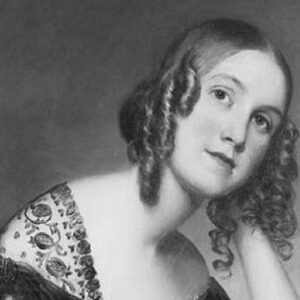
Angelica Hamilton was the eldest daughter of Alexander Hamilton, a prominent “Founding Father of the United States.” Known for her beauty, sensitivity, and vibrant personality, she was a talented dancer and an accomplished musician on the piano and harp. Throughout her youth, she shared a deep bond with her father, often providing musical accompaniment while he sang popular songs. She was also exceptionally close to her older brother, Philip. However, her life took a tragic turn in 1801 when Philip was killed in a duel with George Eacker. The shock of his death devastated the 17-year-old Angelica, triggering a severe mental breakdown that left her in a permanent state of psychological distress for the rest of her life. Despite her parents’ tireless efforts to help her recover, her mental health continued to deteriorate. Following Alexander Hamilton’s death in 1804, her mother, Elizabeth Schuyler Hamilton, took over her care until she was eventually moved to the professional care of Dr. MacDonald. In her later years, Angelica remained trapped in the past; she spoke of her brother Philip as if he were still living and played the same melodies from her youth on the piano until her death.
Childhood & Early Life
Angelica Hamilton was born on September 25, 1784, the second child and eldest daughter of Alexander Hamilton and Elizabeth Schuyler Hamilton. Her father was a primary “Founding Father” and the first U.S. Secretary of the Treasury, while her mother belonged to the wealthy and politically powerful Van Rensselaer and Schuyler families. Angelica was part of a large family of eight children, including her beloved elder brother Philip.
Named after her maternal aunt, Angelica Church, she was celebrated for her charm, beauty, and musical aptitude. She maintained a very close relationship with her father; Alexander once wrote her an affectionate letter at age nine, encouraging her French studies. Her upbringing was culturally rich-she attended dance classes with Martha Washington’s children and became a proficient pianist and harpist. Her aunt even sent her a piano from London, which became a lifelong treasure. Angelica often accompanied her father on the piano while he sang popular songs of the era.
Mental Breakdown & Lifelong Insanity
The trajectory of Angelica’s life changed drastically in November 1801. Her brother Philip was killed in a duel in Weehawken, New Jersey—the same location where her father would fall years later. The 17-year-old Angelica was so devastated by the loss that she suffered a total mental breakdown. She retreated into a state of “eternal childhood,” characterized by an inability to recognize family members or grasp the passage of time.
Her parents sought various ways to help her, including Alexander requesting parakeets and watermelons from friends to cheer her up, but her condition only worsened. In 1804, she suffered further trauma when she stood at her father’s deathbed after his fatal duel with Aaron Burr. Her nephew, psychiatrist Allan McLane Hamilton, later characterized her condition as a permanent form of “insanity” triggered by grief.
Final Years and Legacy
For decades, Elizabeth Schuyler Hamilton devoted herself to Angelica’s care. When Elizabeth’s own health declined, Angelica was placed under the professional supervision of Dr. MacDonald in Flushing, Queens. Throughout her long life, Angelica remained mentally frozen in her youth; she frequently spoke of Philip as if he were alive and spent her hours playing the same songs on the piano she had practiced with her father.
Elizabeth’s 1854 will specifically urged her other children to remain “kind, affectionate, and attentive” to their sister. Angelica passed away in New York on February 6, 1857, at the age of 72, and was buried at Sleepy Hollow Cemetery. Her story has seen a modern resurgence through Ron Chernow’s 2004 biography and Lin-Manuel Miranda’s musical Hamilton, where she is mentioned in songs like “Take a Break.” Her original piano is still preserved and displayed at the Hamilton Grange National Memorial.