

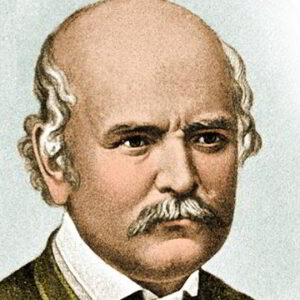
Ignaz Semmelweis was a Hungarian physician of the 19th century who earned the title “Savior of Mothers” for his pioneering efforts to reduce deaths among women after childbirth. He was among the earliest medical professionals to promote antiseptic practices and emphasize the importance of hygiene in healthcare. Semmelweis was born into a prosperous family in Buda, Hungary. After completing his medical education, he specialized in obstetrics. He later worked as an assistant to a professor at a maternity clinic in Vienna, where he observed unusually high mortality rates among women who had recently given birth. Many of these deaths were caused by puerperal fever, a serious infection associated with childbirth. Through his observations, Semmelweis discovered a connection between the spread of the disease and doctors’ failure to clean their hands properly. He concluded that physicians could transfer harmful infectious material from autopsy rooms to maternity patients. To address this problem, he introduced mandatory handwashing with a chlorinated lime solution, particularly for doctors who performed autopsies before examining pregnant women or new mothers. The results were remarkable, as maternal deaths declined significantly after the new hygiene measures were implemented. His discovery was especially important because it came before the scientific community had established the germ theory of disease. Despite the success of his approach, Semmelweis faced considerable opposition from many members of the medical profession. His insistence on hand hygiene challenged prevailing medical beliefs, and his findings were frequently dismissed or ridiculed. Frustrated by the medical community’s resistance, he became increasingly distressed. Eventually, members of his family arranged for him to be admitted to a mental asylum. He died just 14 days after his admission. His death marked a tragic end to the life of a physician whose work had the potential to save countless lives. Years later, Louis Pasteur’s development of germ theory helped establish the scientific basis for understanding infectious diseases. As a result, Semmelweis’s observations and recommendations gained wider recognition after his death. Today, he is remembered as a pioneer of infection prevention whose emphasis on handwashing transformed medical practice and helped lay the foundation for modern hospital hygiene.
Childhood & Early Life
Ignaz Philipp Semmelweis was born on July 1, 1818, in Buda, Hungary, which is now part of Budapest. His father, József Semmelweis, was a successful businessman of German ethnicity who operated a wholesale business dealing in spices and various consumer products. His mother, Teréz Müller, was the daughter of a coach builder. Ignaz was the fifth child in a family of ten children.
In 1837, Semmelweis enrolled at the University of Vienna to pursue legal studies. However, after spending a year studying law, he decided to change his academic direction and pursue medicine. He earned his medical degree in 1844 and subsequently specialized in obstetrics. During his medical training, he studied under prominent physicians, including Carl von Rokitansky and Joseph Škoda, who influenced his professional development.
Career of Ignaz Semmelweis
In 1846, Semmelweis began working as an assistant to Professor Johann Klein at the First Obstetrical Clinic of Vienna General Hospital. His responsibilities involved examining patients, assisting with complicated childbirths, and teaching students who were training in obstetrics.
At that time, Vienna General Hospital operated two maternity clinics. Semmelweis observed that the First Clinic experienced a considerably higher maternal mortality rate than the Second Clinic. Many women died from puerperal fever, a dangerous infection that developed following childbirth.
Determined to understand the cause of these deaths, Semmelweis investigated the differences between the two facilities. He considered commonly suggested explanations, including overcrowding and environmental conditions, but found that these factors did not adequately explain the contrasting mortality rates. He eventually recognized a major distinction in staffing: medical students and physicians worked in the First Clinic, whereas midwives primarily attended patients in the Second Clinic.
A crucial event occurred in 1847 when his friend Jakob Kolletschka died after accidentally sustaining a scalpel injury during a post-mortem examination. While examining the autopsy findings, Semmelweis noticed similarities between Kolletschka’s pathological condition and the findings observed in women who had died from puerperal fever. This observation led him to suspect that doctors were transferring infectious material from deceased bodies to living patients.
Semmelweis concluded that physicians could spread the disease by examining maternity patients immediately after conducting autopsies without adequately cleaning their hands. To prevent this transmission, he introduced compulsory handwashing with a chlorinated lime solution before examining patients. The intervention produced a substantial reduction in maternal deaths at the First Clinic.
Although his observations supported the effectiveness of the new hygiene measures, Semmelweis could not provide a complete scientific explanation for the mechanism of infection. Many physicians were reluctant to accept his conclusions, and some rejected his recommendations. Nevertheless, he continued to enforce handwashing and expanded his procedures to include the cleaning of medical instruments.
By the end of 1847, news of Semmelweis’s findings had spread beyond Vienna. His observations attracted attention in European medical circles, and discussions of his work appeared in medical publications. However, disagreements and misunderstandings surrounding his conclusions persisted, partly because he did not consistently communicate his ideas directly to the wider medical community.
In 1848, political upheaval associated with the Hungarian Revolution affected the wider social and professional environment. Although there is no clear evidence that Semmelweis directly participated in the revolutionary movement, his professional circumstances became increasingly difficult. When his appointment at Vienna General Hospital ended, he was not reappointed.
Semmelweis subsequently applied for a position as a lecturer in obstetrics. In 1850, he received an appointment as a docent of theoretical obstetrics, but the conditions of the position restricted his access to cadavers for teaching. Shortly afterward, he unexpectedly left Vienna and returned to Pest, Hungary.
In 1851, Semmelweis became the honorary head physician of the obstetric ward at Szent Rókus Hospital in Pest. He remained in this position for six years, during which he continued applying his handwashing procedures. These practices were associated with a significant decline in puerperal fever cases, although many medical professionals continued to question his methods.
In 1855, Semmelweis was appointed professor of obstetrics at the University of Pest. He introduced chlorinated handwashing procedures at the university’s maternity clinic, where the intervention again helped reduce maternal mortality. His results strengthened his conviction that improved hygiene was essential to preventing infections associated with childbirth.
During the later years of his career, Semmelweis published essays to explain and defend his findings. Among his important works were The Etiology of Childbed Fever and writings addressing disagreements between his views and those of British physicians. In 1861, he published his major book, The Etiology, Concept, and Prophylaxis of Childbed Fever, in which he presented his observations and recommendations for preventing the disease.
Despite the evidence supporting his methods, Semmelweis struggled to gain widespread acceptance among his contemporaries. His work was eventually recognized as an important contribution to infection prevention, particularly after scientific developments provided a clearer explanation of how microorganisms cause disease.
Family & Personal Life
In 1857, Semmelweis married Mária Weidenhofer, the daughter of a merchant. The couple had five children, two of whom died during infancy.
During the early 1860s, Semmelweis began displaying concerning changes in his behavior and mental state. Accounts of his later life describe periods of depression, absent-mindedness, irritability, and increasingly confrontational interactions with those who disagreed with him. His conduct caused concern among family members and professional associates.
In 1865, Semmelweis was admitted to a mental institution. Historical accounts report that he attempted to leave the facility and was severely beaten by attendants. He was reportedly restrained in a straitjacket and confined under harsh conditions. After spending approximately 14 days at the institution, he died on August 13, 1865, at the age of 47. The recorded cause of death was blood poisoning, although historical accounts also associate his death with injuries sustained during his institutionalization.
Semmelweis’s handwashing recommendations gained broader acceptance after his death, particularly as Louis Pasteur’s research helped establish the germ theory of disease. Later developments in microbiology and antiseptic surgery provided scientific support for the importance of preventing the transmission of infectious microorganisms.
Today, Ignaz Semmelweis is remembered as a pioneering figure in medical hygiene and infection prevention. His insistence on handwashing helped demonstrate that simple preventive measures could save the lives of countless mothers. In recognition of his lasting contribution to medicine, Semmelweis University in Budapest, Hungary, was named in his honor and continues to be associated with medical and health sciences education.